UHI Argyll student leads on development of new digital wellbeing app linking screen time to climate impact
UHI Argyll student, Lauren Keenan, is leading an innovative new project that turns everyday digital habits into positive environmental action.

MauiScreenTime, a digital wellbeing app currently in development, will track users’ time spent on social media and convert it into CO₂‑equivalent (CO₂e) emissions using established carbon‑intensity data. The app then presents the results through clear, nature‑based comparisons to help users understand the hidden environmental cost of their screen time.
Alongside raising awareness, the project encourages small lifestyle changes. Users will receive personalised suggestions to help reduce their digital footprint, and as an incentive, every measurable reduction in screen time will contribute to an on‑campus tree‑planting campaign. The aim is to show that small digital shifts can grow into meaningful environmental impact.
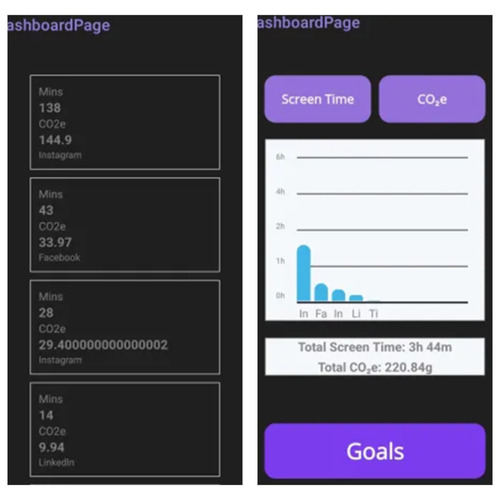
The project, developed by Lauren and fellow BSc Applied Software Development students, has been funded by the UHI Rebel Fund. The fund awards financial support to students to run a project that will make things better for people and the planet at UHI or in the local community.
Les Wright, Lecturer in Computing at UHI Argyll said:
“This project is a brilliant example of what happens when students combine technical skill with real‑world purpose. It takes something as ordinary as screen time and turns it into a catalyst for environmental awareness and positive change. We’re incredibly proud to see this level of innovation coming from our own students.”
The pilot phase, running from January to May 2026, will focus on building a functional prototype, testing it with a small user group, and hosting one or two collaborative tree‑planting events to showcase early results and inspire wider student involvement.
MauiScreenTime brings together software development, sustainability, and student collaboration, transforming climate data into something people can see, feel, and act on. It shows that even the smallest digital choices can spark real environmental change, one minute and one tree at a time.